

Blog > Should You Sell House Before Buying in South Florida?
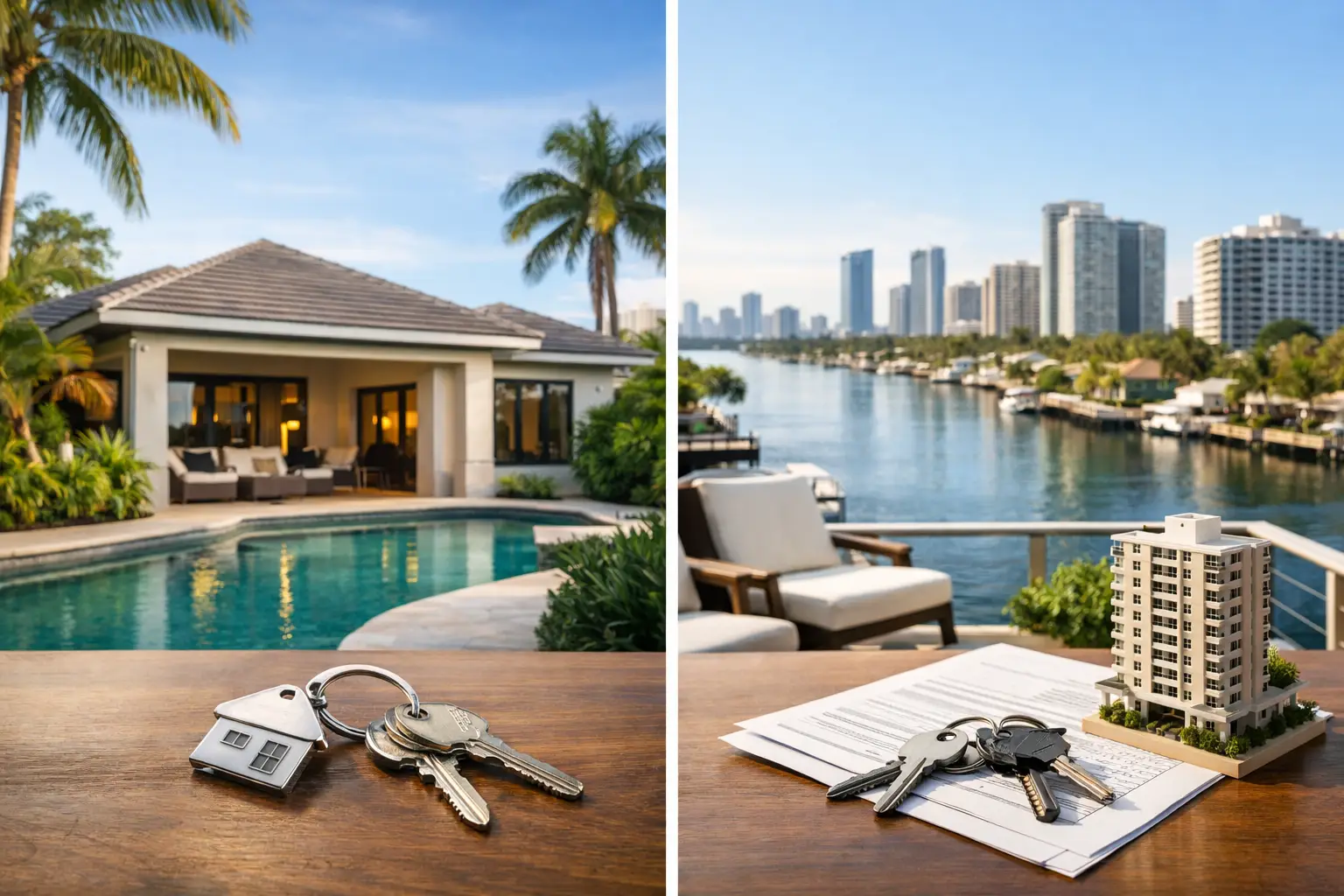
You have outgrown your current home, found the right neighborhood, or decided it is time for a different lifestyle. Now comes the question almost every move-up buyer in Broward and Palm Beach Counties faces: should you sell your house before buying in South Florida, or buy first and sell later? The answer depends on your finances, risk tolerance, timeline, and how competitive your target market is right now.
There is no single correct order. Selling first can make your next purchase cleaner and stronger. Buying first can give you more control over timing and reduce the stress of moving twice. The key is to understand the trade-offs, know your financing options, and choose the sequence that protects both your budget and your negotiating position.
Selling First: The Cleaner Financial Path
Selling your current home before buying the next one is the more conservative approach, and for many South Florida homeowners it is the right one. When your current home is sold or firmly under contract, you know exactly how much equity you have to work with. That clarity makes it easier to set a realistic budget, choose a price range, and avoid stretching into a payment that depends on an uncertain sale.
A sold home also strengthens your offer. Sellers and listing agents in Fort Lauderdale, Pompano Beach, Coral Springs, and Boca Raton prefer buyers who are not waiting on another closing. An offer that is not contingent on selling a current home is simpler to evaluate and less likely to fall apart. In a competitive situation with multiple offers, that simplicity can matter as much as price.
Financing is also more straightforward when you sell first. Your debt-to-income ratio is cleaner, your down payment is confirmed, and your lender does not have to navigate the complexity of two overlapping mortgages. For buyers using conventional, FHA, or VA financing, that simplicity can reduce conditions and speed up underwriting.
The main drawback is the transition. You may need temporary housing, a short-term rental, or an arrangement to stay with family between closings. Moving twice is inconvenient and can add cost. Some sellers negotiate a rent-back agreement that lets them remain in the sold home for a defined period after closing, which can bridge the gap if the timing works for both sides.
Buying First: More Control, More Carrying Cost
Buying before you sell gives you the most control over the process. You can move once, on your own schedule, and take time to prepare your current home for sale without living in a construction zone. For families with children in school or owners with demanding work schedules, that breathing room has real value.
The trade-off is financial. Until your current home sells, you may be carrying two mortgages, two insurance policies, two tax bills, and two sets of maintenance costs. In South Florida, where insurance and property taxes are already significant, that overlap deserves careful calculation. You should also consider HOA dues if either property is in a managed community, since those continue regardless of occupancy.
Qualifying for the second mortgage while still owning the first can also be challenging. Lenders will evaluate whether you can carry both payments, and some will count a portion of the rental income only if the current home is leased with a documented agreement. If your current home does not sell as quickly as expected, the carrying costs continue and the pressure to accept a lower offer can grow.
Some buyers use a home-equity line of credit, bridge financing, or other short-term tools to fund the down payment on the new home before the old one sells. These options can work, but they add cost and complexity. Discuss the full picture with your lender before committing to a buy-first plan so there are no surprises in underwriting.
The Contingent Offer Middle Ground
A third path is making an offer that is contingent on the sale of your current home. This lets you shop and secure a target property while still owning your current one. If your home does not sell within the agreed timeframe, you can typically exit the contract under the contingency terms.
The challenge is that many sellers view sale contingencies as weaker offers, particularly when they have non-contingent alternatives. A contingent offer may still succeed when the buyer's current home is already listed, competitively priced, and in a segment with strong demand. It is a harder sell when the current home is not yet on the market or is in a slower price band.
If you go this route, the strength of your contingency offer depends heavily on how sale-ready your current home is. A home that is listed, well-priced, and showing strongly gives the seller of your target property more confidence. Your agent can also structure the contingency with clear timelines and kick-out provisions that make the offer more palatable.
How South Florida Market Conditions Affect the Decision
Local conditions should influence your sequencing. In a seller's market with low inventory in your target neighborhood, desirable homes may move quickly and attract competing offers. Buying first, or at least being ready to act without a sale contingency, can be an advantage when you find the right property.
In a more balanced market, or when your current home is in a high-demand segment, selling first may carry less risk. If well-priced homes in your current neighborhood are going under contract quickly, the gap between selling and buying may be short.
Consider both sides of your transaction separately. The market for your current home and the market for your target home may behave differently. A condo in a building with rising HOA costs may sell more slowly than a single-family home in a sought-after school zone. Your agent should evaluate days on market, inventory, and buyer demand for each property type and price range involved.
Practical Steps Before You Decide
Before choosing an order, get a realistic picture of your current home's value and sale timeline. A comparative market analysis based on recent closed sales, current competition, and your home's condition will tell you what to expect. If your home needs work to compete, factor in the time and cost of preparation.
Talk to your lender early about both scenarios. Ask what you qualify for if you buy before selling, what happens to your ratios once the current home is under contract, and what documentation the lender needs at each stage. Financing rules vary by loan program, and assumptions made without lender input are a common source of transaction stress.
Also plan the logistics. If you sell first, line up temporary housing options and understand the cost. If you buy first, confirm you can comfortably carry both properties for several months beyond your expected timeline. Hope is not a strategy when two mortgages are involved.
The sell-first versus buy-first decision shapes everything from your offer strength to your moving schedule. Komplete Realty can help you evaluate both sides of the move, coordinate the timing, and structure a plan that keeps you in control from listing through closing.
GET MORE INFORMATION
